Moving an office is very different from moving a home. There are employees to coordinate, equipment to protect, files to organize, clients to notify, and downtime to avoid. A poorly planned office move can interrupt operations, frustrate your team, and create unnecessary costs.
That is why having a clear office moving checklist is one of the smartest ways to keep your business relocation organized from the beginning. Whether you are moving a small office, expanding into a larger space, relocating departments, or moving your business across state lines, the right plan makes the entire process easier to manage.
At Star Moving Solutions, business relocations are handled with planning, coordination, and care. If you need professional support, our corporate moving services are designed to help businesses reduce disruption and keep their teams productive during the move.
1. Start Planning as Early as Possible
The earlier you start planning your office move, the fewer last-minute problems you are likely to face. For most businesses, the planning process should begin several months before the move date.
Start by confirming your new office address, expected move date, lease requirements, elevator access, parking restrictions, loading dock availability, and building rules. Many commercial buildings have strict moving policies, especially when it comes to after-hours access, insurance certificates, freight elevators, and where moving trucks can park.
This is also the time to decide whether your move will happen during business hours, after hours, over a weekend, or in phases. A phased move may be useful if your business needs to stay operational while different departments relocate at different times.
2. Create an Internal Move Team
Even if you hire professional office movers, your business should still have an internal move team. This team does not need to be large, but it should include people who understand operations, IT, HR, facilities, and management.
Assign one person as the main point of contact. This helps avoid confusion when decisions need to be made quickly. The internal move team should be responsible for communicating timelines, confirming department needs, collecting employee questions, and making sure important details are not missed.
For larger companies, each department should have a move coordinator. Their job is to make sure employees know what to pack, what to label, what to leave behind, and what needs special handling.
3. Inventory Furniture, Equipment, and Files
Before anything is packed, create a full inventory of what is moving. This should include desks, chairs, conference tables, filing cabinets, computers, monitors, printers, servers, artwork, reception furniture, breakroom equipment, and any specialized business equipment.
An inventory helps you decide what should move, what should be donated, what should be recycled, and what should be replaced. Moving is often the perfect time to reduce clutter and avoid paying to transport items your business no longer needs.
If your office has sensitive files, legal documents, HR records, financial records, or client paperwork, decide how those items will be packed, labeled, secured, and transported. Confidential documents should never be left loose or unlabeled during a move.
4. Coordinate IT and Technology Early
Technology is one of the most important parts of an office relocation. If phones, internet, servers, workstations, payment systems, or security systems are not ready, your business may lose valuable working time.
Speak to your IT provider early. Confirm when equipment will be disconnected, how it will be labeled, who will handle reconnection, and when your internet provider will activate service at the new location.
Every workstation should be clearly labeled so computers, monitors, docking stations, phones, keyboards, and cables arrive at the correct desk. If your business has servers or network equipment, those items may need special packing and careful handling.
For companies with complex requirements, Star also offers commercial services that can support specialized business moving needs.
5. Communicate With Employees
Employees should know the move timeline well in advance. Give them clear instructions on what they need to pack, what the movers will handle, when packing needs to be completed, and what they should take home before moving day.
A simple employee moving guide can help. Include details such as:
What items should be packed in personal crates
How desks should be labeled
What should not be packed
Where employees should report on the first day in the new office
Who to contact with questions
How parking, access cards, and seating will work
The more clearly you communicate, the less confusion there will be on moving day.
6. Label Everything Clearly
Labeling is one of the easiest ways to prevent chaos during an office move. Every box, crate, chair, monitor, filing cabinet, and piece of furniture should have a clear destination label.
Use department names, employee names, floor numbers, room numbers, or color-coded labels. If your new office has a floor plan, make sure the moving team has a copy before the move begins.
A clear labeling system allows movers to place items in the correct locations instead of stacking everything in one area. This saves time during unpacking and helps employees get back to work faster.
7. Plan for Storage if Needed
Not every office move is a direct move from one space to another. Sometimes furniture arrives before the new office is ready. Sometimes the old lease ends before renovations are complete. Sometimes a business downsizes and needs time to decide what to keep.
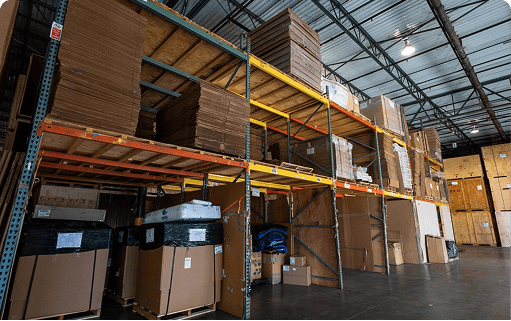
In those situations, short-term or long-term storage can make the move much easier. Star Moving Solutions offers secure storage solutions for businesses and households that need extra flexibility during the relocation process.
Storage can be especially useful for extra furniture, archived records, seasonal equipment, marketing materials, trade show displays, or items that are not needed immediately in the new office.
8. Notify Clients, Vendors, and Service Providers
Your office move should not create confusion for clients or vendors. Update your address with banks, insurance providers, suppliers, delivery companies, payroll systems, licensing agencies, online directories, and any subscription services.
You should also update your website, Google Business Profile, email signatures, invoices, letterheads, social profiles, and appointment reminders.
Let clients know when the move is happening and whether there will be any temporary service interruptions. If your business receives deliveries, make sure vendors know the new address and the first date deliveries should be sent there.
9. Prepare for Moving Day
Before moving day, confirm the schedule with your moving company, building management, employees, IT provider, and internal move team.
Make sure elevators are reserved, access doors are unlocked, parking areas are available, and someone from your team is present at both the old and new locations.
Create a moving day folder with important contacts, building rules, floor plans, inventory sheets, emergency numbers, and vendor details. This gives your team one place to find answers if questions come up.
If your business is moving within the Northern Virginia, Maryland, or Washington, DC area, professional local moving services can help make the process more efficient. If the move crosses state lines, Star’s interstate moving services can support the additional planning required.
10. Unpack in Priority Order
Once everything arrives, focus on the essentials first. IT equipment, phones, internet, workstations, reception areas, meeting rooms, and important files should be prioritized.
Do not expect every decorative or non-essential item to be placed perfectly on day one. The goal is to get your team operational as quickly as possible. Once the essentials are working, you can fine-tune storage areas, signage, breakrooms, and shared spaces.
Final Thoughts
An office move does not have to disrupt your entire business. With the right checklist, early planning, clear communication, and professional support, your team can move into the new space with less stress and fewer delays.
If your company is planning a business relocation, Star Moving Solutions can help coordinate the details from start to finish. From office furniture and employee workstations to storage and long-distance moving, our team is ready to make your next office move smoother, safer, and better organized.



 Norwegian
  English
  Spanish
  German
  Italian
  Swedish